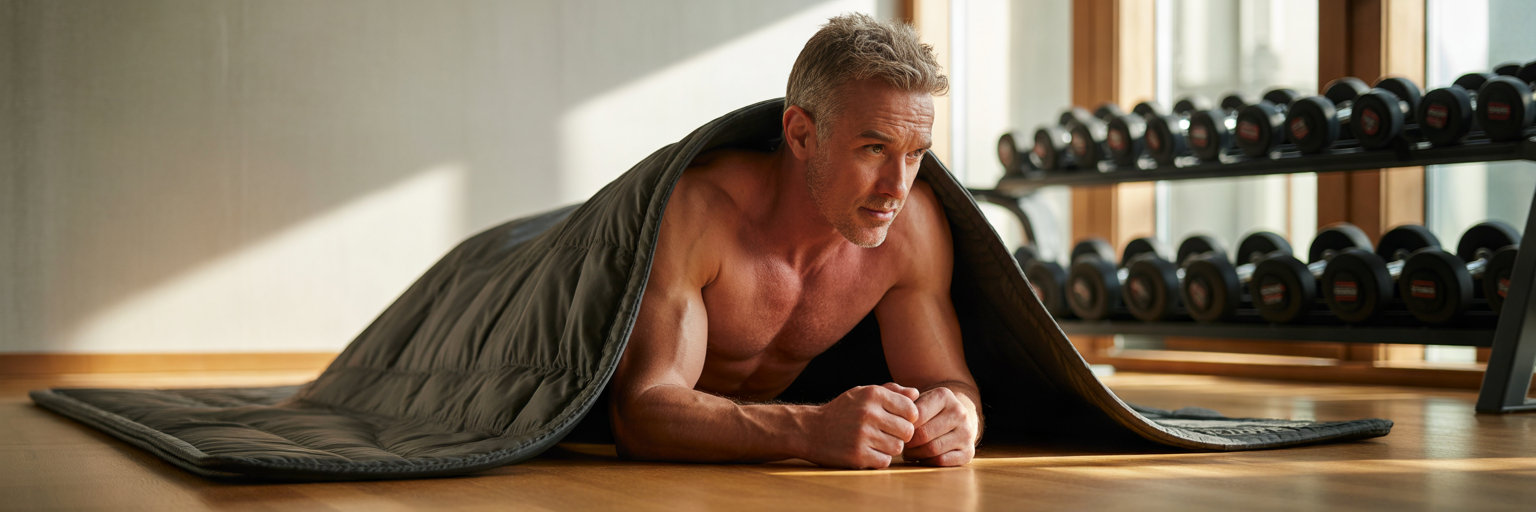
Clinical physiology research confirms that far infrared radiation warms superficial muscle tissue up to 2.4 centimetres below the skin without subjecting the body to extreme ambient air temperatures. When you explore how infrared sauna blankets calm peripheral nerves and restore muscular force, you gain the clarity needed to decide which recovery system actually belongs in your home.
Why Infrared Sauna Blankets Feel Different After Heavy Training
You know the exact sensation that arrives thirty-six hours after a heavy eccentric leg session or a long Sunday road run. Walking down a flight of stairs feels mechanical and guarded, and reaching overhead to grab a mug from the cupboard reveals a thick, stubborn tightness across your lats and shoulders. Sitting on the couch does nothing to shift it, and ten minutes of static stretching on the living room carpet only pulls at tissue that refuses to yield. That heavy, lingering resistance is the physical reality of delayed onset muscle soreness, where simple rest leaves you waiting days for your normal stride to return.
Inside the muscle belly, eccentric contractions and repetitive loading have created microscopic structural disruption across the individual muscle fibres. Your body responds to this mechanical strain by initiating a localized inflammatory cascade, drawing fluid into the surrounding extracellular space. As that fluid accumulates, it increases internal pressure against the fascia and bathes nearby peripheral nerve endings in chemical byproducts that heighten their sensitivity. Your brain interprets that heightened nerve signalling and subtle tissue swelling as stiffness and dull ache, which is why every movement feels laboured until the local fluid clears and the nerve receptors settle down.
When passive sitting fails to clear that congestion, active thermal intervention changes the local environment, a principle we examine closely across our guide to passive recovery tools for athletes. Stepping into a traditional timber sauna forces you to breathe heavy, scorching air just to warm your outer skin, whereas slipping into an enclosed infrared blanket wraps your limbs in direct, radiant warmth while your head remains in cool room air. It is critical to distinguish this deep muscular recovery from superficial skin repair, because thermal energy belongs on intact, fatigued muscle bellies rather than compromised surface tissue. Just as a specialist outlining a definitive guide to aftercare for large tattoos will warn you to keep heat strictly away from fresh epidermal trauma, applying radiant heat to intact skeletal muscle works precisely because the underlying vascular network is ready to expand and flush trapped fluid. Understanding how your vasculature and nervous system respond to targeted thermal input allows you to evaluate post workout recovery equipment based on your actual physiology rather than marketing promises.
Radiant Heat Versus Air Temperature in Superficial Tissue
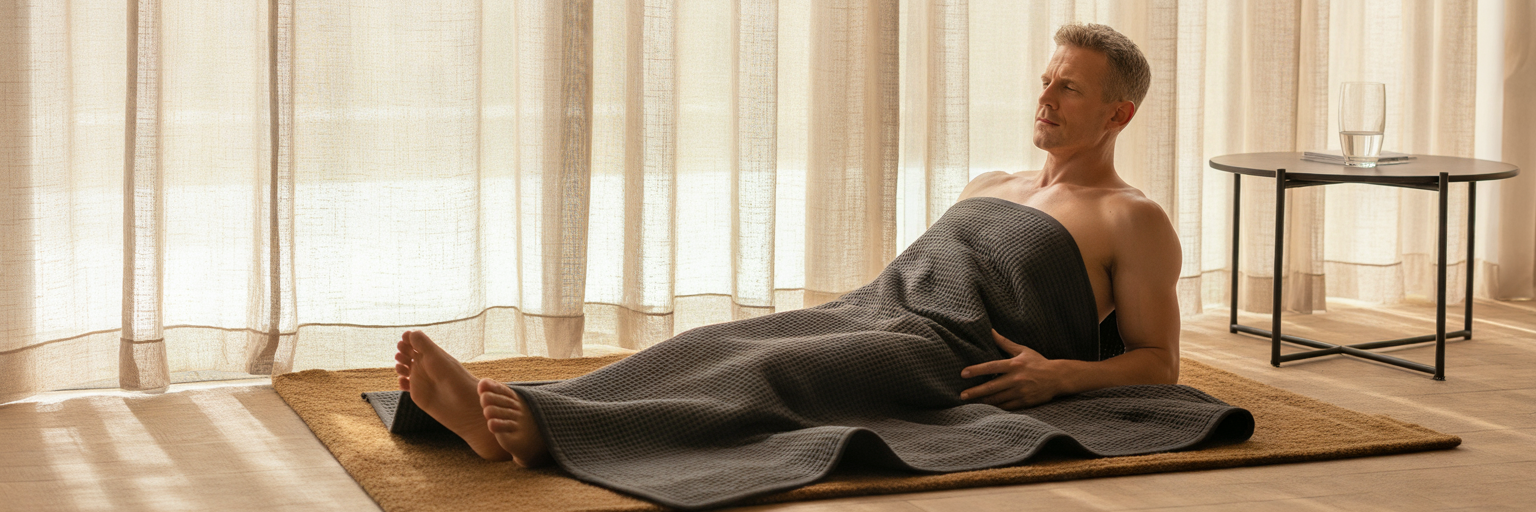
Most people assume heat is simply a matter of raising the thermometer, yet how thermal energy travels into your body dictates how your cardiovascular and muscular systems react. When you compare an enclosed thermal wrap to a traditional cabin or a hot bath, the physical mechanism of heat transfer determines whether you finish the session feeling restored or completely drained.
The Physics of Direct Tissue Warming
A traditional Finnish sauna relies on convection, heating the cabin air to between 80 and 95 degrees Celsius so that the hot air gradually warms the outer layer of your skin. An infrared blanket operates on a completely different physical principle by emitting far infrared wavelengths from carbon-fibre heating elements lined inside the wrap. Because radiant energy travels directly into solid objects without needing to heat the air in between, the blanket operates comfortably between 40 and 60 degrees Celsius while your head rests on a pillow breathing normal room air. As those infrared waves absorb into your skin and underlying tissue, they trigger local vasodilation, widening the arterioles and capillary beds throughout your limbs and torso. Your heart rate rises moderately to support this expanded vascular network, driving oxygen-rich blood into stiff muscle compartments while accelerating the venous return that clears metabolic byproducts linked to lingering soreness.
Where the Heat Actually Reaches
Commercial wellness brands frequently exaggerate how far infrared wavelengths travel, often claiming their products heat deep internal organs or penetrate straight to the bone. Grounded physiological research tells a much clearer and more useful story. According to a landmark thermal study published by the American Physiological Society in the Journal of Applied Physiology, far infrared radiation directly warms tissue up to 2.4 centimetres below the skin surface without causing an unsafe spike in core intestinal temperature. While 2.4 centimetres might sound modest compared to glossy brochure claims, that exact depth encompasses your dermis, subcutaneous fat layer, dense microvascular capillary networks, peripheral nerve endings, and the outer bellies of your major skeletal muscles. Warming this two-centimetre zone directly lowers muscle spindle excitability and calms irritated sensory nerves, which explains the immediate drop in perceived stiffness and the autonomic shift detailed in our breakdown of why sauna blankets leave you feeling relaxed.
| Thermal Factor | Far Infrared Sauna Blanket | Traditional Finnish Dry Sauna | Passive Warm Bath |
|---|---|---|---|
| Operating Temperature | 40°C to 60°C radiant interface | 80°C to 95°C convective air | 38°C to 40°C conductive water |
| Primary Heat Transfer | Direct infrared radiation to skin | Heated air warming skin surface | Water conduction across submerged skin |
| Measured Tissue Depth | Up to 2.4 cm into superficial muscle | Surface heating with secondary blood transfer | Surface skin and immediate subcutis |
| Cardiovascular and Breathing Load | Moderate heart rate rise, cool breathing air | High cardiac strain, hot inhaled air | Low cardiac strain, hydrostatic pressure |
Looking at these thermal depth realities changes how you shop for a home infrared sauna. You do not need extreme cabin temperatures or massive electrical draw to reach the vascular beds and nerve endings that govern muscular tightness. By targeting the superficial two centimetres of tissue with direct radiant contact, an insulated blanket achieves the necessary local vasodilation while sparing your respiratory tract and nervous system from the heavy strain of ninety-degree air.
What Clinical Evidence Shows About Force Restoration and Soreness
Expanding blood vessels and warming superficial tissue feels pleasant in the moment, but the true test of any recovery modality is whether your muscles actually produce force the following day. When sports scientists measure neuromuscular recovery after heavy training, they look beyond subjective comfort to track how quickly an athlete regains explosive power and maximal contraction strength.
Clinical trials examining post-exercise infrared therapy demonstrate measurable improvements in how fast fatigued muscle fibres recover their mechanical output. Research indexed in PubMed Central found that a single post-exercise infrared session significantly accelerated the restoration of countermovement jump height and sped up the return of maximal voluntary isometric contraction torque following demanding resistance exercise. In practical terms, when thermal energy increases microvascular perfusion and reduces localized fluid tension inside the muscle fascia, the individual sarcomeres encounter less internal resistance when firing. Your nervous system no longer applies the subtle protective braking mechanism that usually limits strength output when tissue feels swollen and tender.
For active Australians in their forties, fifties, and sixties, this accelerated return of muscular force and lower subjective pain scores translates directly into training consistency. When peripheral nerve excitability settles down overnight, you wake up with a comfortable range of motion through your hips, knees, and shoulders. Instead of modifying your Tuesday gym session or skipping a Thursday morning swim because your lower back still feels locked up from the weekend, you maintain the weekly training volume required to preserve lean muscle mass and bone density. Furthermore, because the blanket operates at moderate interface temperatures while you breathe cool bedroom air, it places a gentle load on your autonomic nervous system. Unlike late-evening sessions in an extreme dry sauna that can leave your sympathetic nervous system elevated for hours, gentle radiant warming encourages parasympathetic dominance without disrupting overnight heart rate variability or deep sleep architecture.
Even with these clear advantages, a trustworthy evaluation of muscle soreness recovery products requires acknowledging where the scientific evidence is still developing. While clinical data confirms that far infrared therapy reliably reduces delayed onset muscle soreness and supports short-term force restoration, exercise physiologists are still investigating the exact thermal dose and session durations needed to influence long-term cellular hypertrophy. As we highlight in our comprehensive guide to infrared sauna blankets, you should view a thermal blanket as a dependable tool for managing week-to-week soreness and nervous system downregulation rather than a shortcut for muscular adaptation.
How Thermal Blankets Compare to Cold Plunges and Red Light Systems
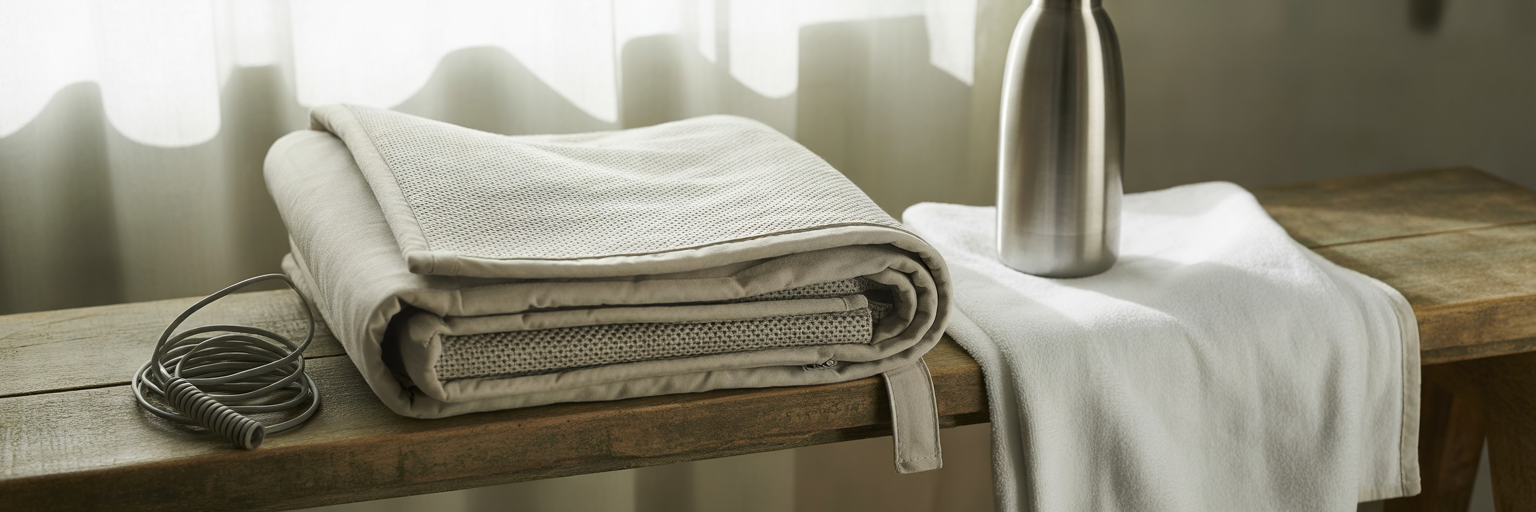
Understanding what radiant heat does inside your tissue is only half the equation when setting up a recovery space at home. To spend your budget wisely, you need to see how a warming wrap behaves in real life alongside cooling tubs, light therapy panels, and electromagnetic mats, since each system pulls a completely different physiological lever.
Vasodilation Versus Acute Cold Constriction
Heat and cold drive opposite vascular responses, and choosing the wrong thermal direction at the wrong time can work against your recovery goals. While an infrared blanket uses sustained warmth to dilate blood vessels and coax stiff connective tissue into lengthening, localized cooling alternatives like Ice Blankets or full-body cold water immersion systems such as Plunge Chill trigger rapid vasoconstriction. Submerging yourself in chilled water immediately reduces local blood flow, numbs acute joint irritation, and triggers a sharp sympathetic nervous system spike followed by a parasympathetic rebound. As we examine in our comparison of cold plunges versus infrared sauna blankets, cold immersion makes the most physiological sense immediately after high-volume joint impact or training in oppressive summer heat when your core temperature is already sky-high. Conversely, radiant heat is the superior lever twenty-four to forty-eight hours post-training, when acute heat has subsided and your primary objective is flushing stagnant extracellular fluid and restoring elastic compliance to tight muscle bellies.
Thermal Input Versus Cellular Photobiomodulation
Not every recovery problem requires changing your tissue temperature. If your muscles feel deeply fatigued at a cellular level rather than mechanically tight, non-thermal modalities take a completely different pathway. Red and near-infrared light therapy panels from providers like Mito Health use specific optical wavelengths to stimulate cytochrome c oxidase inside your mitochondria, boosting adenosine triphosphate production and modulating oxidative stress without generating noticeable tissue heat or sweat. Similarly, pulsed electromagnetic field mats use low-frequency electromagnetic waves to support cellular signalling and calm the nervous system without thermal load, which is why many homeowners explore our guide on combining PEMF mats and infrared sauna blankets for a layered approach. In an Australian climate, your local weather and daily schedule heavily influence which system you actually use. During a humid February week in Brisbane, standing in front of a zero-sweat red light panel or stepping into a chilled tub feels effortless, whereas unrolling a warming infrared blanket on a frosty July evening in Melbourne or Canberra delivers deep physical relief that cold water or optical light cannot replicate.
| System Category | Primary Biological Mechanism | Ideal Recovery Window | Australian Home Setup and Maintenance |
|---|---|---|---|
| Infrared Sauna Blanket | Superficial vasodilation and reduced nerve excitability | 24 to 48 hours post-training or evening wind-down | Folds into cupboard, requires wiping sweat after each use |
| Cold Plunge Tub | Acute vasoconstriction and autonomic nervous reset | Immediately after high-heat or high-inflammation sessions | Requires dedicated floor or patio space, water filtration upkeep |
| Red Light Therapy Panel | Photobiomodulation and mitochondrial ATP support | Pre-workout priming or daily cellular maintenance | Wall or stand mount, zero cleanup or clothing changes needed |
| PEMF Therapy Mat | Low-frequency electromagnetic cellular signalling | Passive rest days and nervous system downregulation | Lays flat on floor or bed, minimal wipe-down required |
Choosing the Right Recovery System for Your Home Routine
When you are prepared to invest between $500 and $5,000 in home recovery equipment, the practical realities of daily ownership matter just as much as clinical physiology. Searching for an infrared sauna blanket Australia wide quickly reveals a crowded market where cheap, poorly insulated imports sit alongside meticulously engineered systems. What separates the best infrared sauna blanket from a frustrating budget purchase comes down to material integrity and thermal consistency. Well-built blankets use evenly spaced carbon-fibre heating wiring wrapped in multi-layer shielding so you experience uniform radiant warmth along your hamstrings, back, and shoulders rather than scorching hot spots over your calves. They also feature heavy-duty, non-toxic waterproof polyurethane or high-grade vinyl interiors that do not off-gas volatile organic compounds when heated, paired with responsive thermal cut-switches, full 230V Australian electrical compliance, and accessible local warranty support.
Before committing your money, picture the exact forty-five-minute routine required every time you use a thermal blanket. Unlike a red light panel that you switch on for ten minutes before your morning shower, or a permanent timber sauna cabin that stays ready in a spare room, a blanket requires setup and cleanup. You need to lay it flat on a bed, sofa, or yoga mat, pre-heat the unit for ten to fifteen minutes, and either wear full-length cotton barrier clothing with thick socks or insert a dedicated towel liner to catch perspiration. Once your session finishes, you must spend five minutes wiping down the interior surface with a gentle antibacterial spray and letting the fold lines air dry before packing it back into a linen cupboard. If you live in an apartment or want high-output thermal therapy without sacrificing floor space, that five-minute wipe-down is a remarkably small trade-off. If you know that cleaning sweat after every session will cause the blanket to sit unused in the closet, you are much better served comparing zero-cleanup PEMF mats or upright light panels.
The smartest buyers never evaluate a single product in isolation. Before making a purchase, take the time to compare at least three competing models across specifications, interior fabric quality, temperature controls, and Australian warranty terms, while weighing whether a thermal wrap, a cold tub, or a light system best matches your climate and training load. You can explore the independent specification breakdowns, side-by-side reviews, and ownership guides in our infrared sauna blankets directory to compare your options clearly and choose the recovery system that genuinely fits your body and your home.