Hours after a heavy training block ends, the primary obstacle to your next performance is rarely a lack of willpower, but rather a nervous system and vascular network still operating as if the workout never stopped. Understanding how passive recovery tools for athletes interact with that internal physiology separates equipment that genuinely restores physical capacity from gadgets that only offer a brief distraction.
How Passive Recovery Tools for Athletes Affect Post-Workout Physiology
You know the exact sensation that arrives around nine o'clock in the evening after a brutal session on the track or under the barbell. Your legs feel heavy and leaden, yet your mind remains uncomfortably wired, leaving you tossing in bed while your resting heart rate refuses to drop. Inside your limbs, the intense mechanical strain of training has created microscopic structural tension across your muscle fibers. Simultaneously, localized fluid accumulates within the interstitial spaces surrounding those tissues, delaying the clearance of metabolic byproducts while your sympathetic nervous system stays locked in a defensive fight-or-flight posture.
Resolving this deep structural and metabolic fatigue requires an entirely different biological approach than managing superficial epidermal repair, such as following specialized protocols for flawless tattoo healing in humid climates where surface-level skin barrier protection is the primary goal. Deep below the dermis, skeletal muscle and vascular recovery depend on restoring hemodynamic flow, clearing cellular debris, and shifting your autonomic nervous system back toward a parasympathetic state. Simply collapsing onto the living room sofa or spending five distracted minutes performing basic static stretches rarely resolves this physiological bottleneck, because passive inactivity allows interstitial fluid to pool while leaving sympathetic nerve tone elevated.
This gap between needing rest and actually achieving cellular restoration explains why the commercial market for post workout recovery equipment has expanded so rapidly over the past decade. Unfortunately, clever marketing frequently outpaces independent scientific validation. For Australian athletes and active adults between forty and seventy, the central challenge lies in separating passive recovery tools for athletes that merely produce a temporary sensory distraction from home systems that genuinely accelerate physiological restoration. Instead of collecting random gadgets that gather dust in a cupboard, you can build a structured passive recovery setup at home that complements foundational biological pillars like uninterrupted sleep and adequate protein intake.
Thermal Stress and Cold Water Immersion Systems at Home
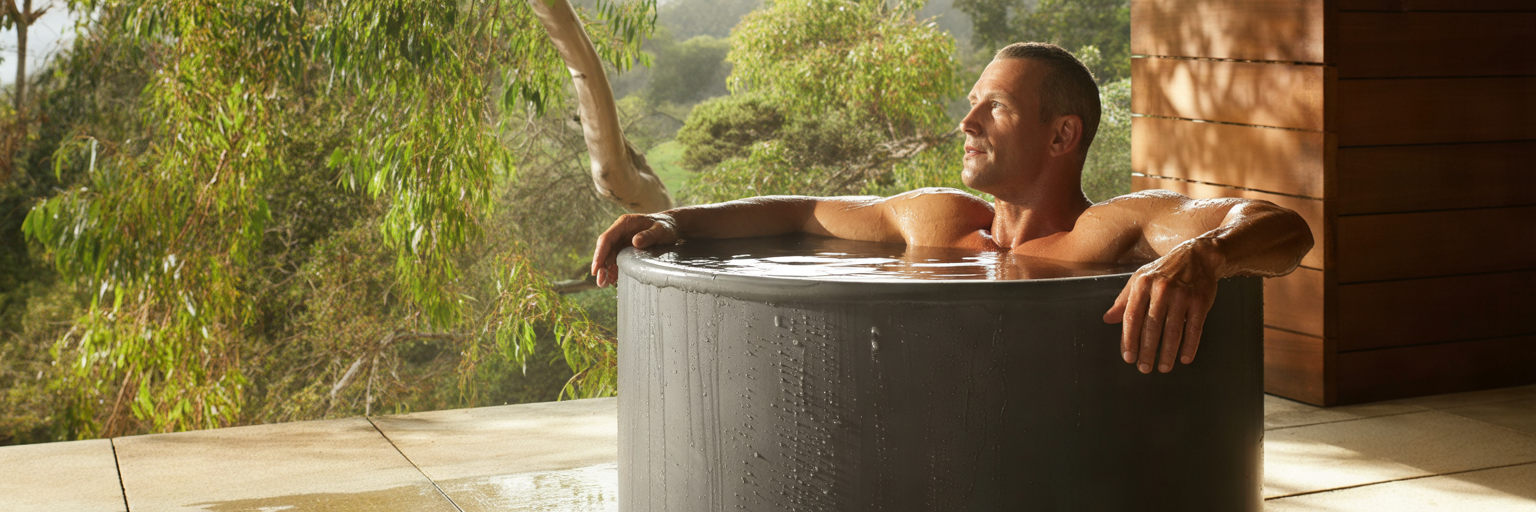
When your primary goal involves calming acute inflammation and flushing fatigued limbs after high-volume endurance work, thermal stress offers one of the most direct physiological levers available. Stepping into cold water triggers immediate peripheral vasoconstriction, which drives pooled blood back toward your core, lowers localized tissue temperature, and dampens the nerve conduction velocity responsible for throbbing post-exercise pain. According to a comprehensive narrative review published in the National Center for Biotechnology Information, immersing your body for 11 to 15 minutes in water chilled between 11°C and 15°C reliably reduces delayed onset muscle soreness after demanding training sessions.
However, thermal constriction carries a critical biological trade-off that equipment manufacturers rarely mention in their promotional brochures. As highlighted in a literature review from the American College of Sports Medicine, habitual cold water immersion immediately following heavy resistance training can actually blunt long-term muscle hypertrophy and strength gains. Cold exposure shuts down the exact acute inflammatory signaling cascade and satellite cell activity that your body relies on to remodel thicker, stronger muscle fibers. Consequently, you should reserve full-body cold immersion for multi-day tournament play, intense summer running blocks, or acute joint soreness management, while leaving the cold tub covered for at least four to six hours after pure strength or hypertrophy workouts.
Applying these exact temperature protocols in an Australian home introduces immediate practical realities. During a warm January in Brisbane, Sydney, or Perth, ambient tap water often comes out of the hose above 24°C, which sits far outside the therapeutic window required to trigger meaningful vasoconstriction. Hauling six bags of ice from the local service station after every long weekend run quickly becomes expensive and unsustainable. Evaluating the insulation, micron filtration, and cooling power across our dedicated cold plunge tubs directory helps you identify which self-contained systems can hold a true 11°C temperature outdoors without overworking their compressors. For athletes comparing specifications to find the best cold plunge Australia offers for year-round backyard reliability, dedicated cooling units like Plunge Chill eliminate the daily friction of manual ice hauling while maintaining precise water sanitation. Conversely, if you live in an apartment or prefer targeted thermal relief on a stiff knee or lower back without dedicating patio space to a full tub, simpler localized options like Ice Blankets deliver concentrated cooling with zero plumbing or water chemistry maintenance.
Cellular Energy Restoration Through Photobiomodulation and Infrared Heat
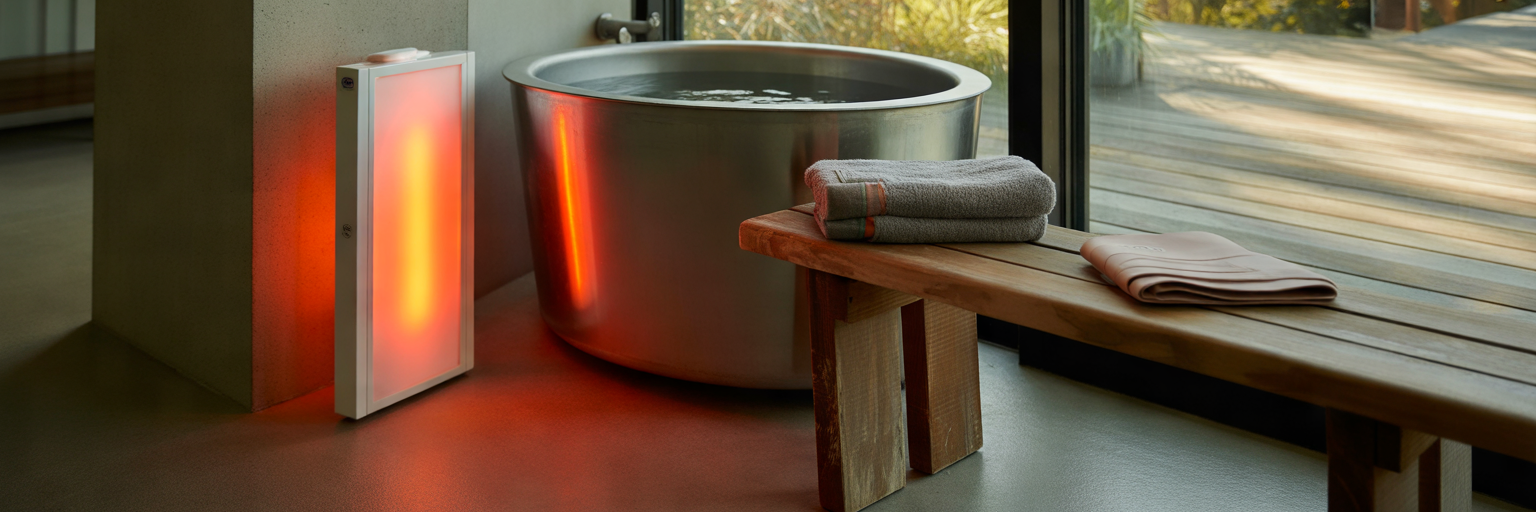
While cold water manipulates blood flow from the outside in, light and radiant heat address fatigue at the microscopic level without suppressing the inflammatory signals needed for muscle growth. Photobiomodulation uses specific wavelengths of red and near-infrared light to penetrate the epidermis and reach the underlying muscle tissue. Once absorbed by photoreceptor proteins inside your cells, this light energy stimulates the mitochondria to produce more adenosine triphosphate, commonly known as ATP, while modulating exercise-induced oxidative stress. You receive cellular support without placing any mechanical strain on tired joints or connective tissues.
Looking objectively at the sports science literature requires a balanced perspective. Several meta-analyses indicate that photobiomodulation applied before or after intense exercise can outperform traditional cryotherapy in reducing muscular fatigue, blunting biochemical damage markers, and preserving maximal strength output. At the same time, the broader research field still contends with small sample sizes and wildly inconsistent clinical dosing protocols. Because clinical results depend entirely on delivering enough light energy to the target tissue, anyone researching red light therapy Australia must look past vague wellness claims and examine verifyable engineering specifications. When you compare units across our home red light therapy panels category, focus specifically on irradiance measured in milliwatts per square centimeter, total LED density, and verified dual wavelengths around 660 nanometers for superficial tissue and 850 nanometers for deeper muscular penetration.
Understanding the distinct biological pathways detailed in our guide to cold plunges versus red light therapy makes it clear why strength athletes and active older adults often gravitate toward light and gentle heat. Standing in front of a high-output light panel for fifteen minutes or zipping into a home infrared sauna blanket in the evening encourages deep parasympathetic nervous system downregulation, warming stiff fascia and promoting restful sleep without blunting hypertrophy. To move beyond subjective feelings of energy and verify whether your cellular protocols are genuinely lowering systemic inflammation, you can track objective internal blood biomarkers through services like Mito Health alongside your training log. Combining targeted light exposure with periodic biomarker data ensures your investment translates into measurable physiological readiness.
Mechanical Pressure from Compression Garments to Pneumatic Systems
Beyond temperature and light, the physical mechanics of fluid movement dictate how quickly your legs recover their spring after eccentric loading. When you finish a heavy session of squats or downhill running and spend the rest of the day sitting at a desk, gravity works against your circulation. Interstitial fluid and metabolic byproducts, including intracellular enzymes like lactate dehydrogenase, pool within the lower extremities and create that familiar morning stiffness when you first step out of bed.
External mechanical pressure counters this gravitational pooling by supporting venous return and assisting the lymphatic system in clearing excess fluid. Interestingly, one of the most effective tools in this category is also the simplest. Sports science surveys show that up to 71 percent of elite athletes wear simple static compression garments during sleep, and systematic reviews confirm strong meta-analytic evidence that graduated compression garments improve recovery beyond 24 hours post-resistance training. Because a well-fitted pair of compression tights requires zero setup effort, makes no noise, and stays on passively overnight, it delivers continuous hemodynamic support and measurably lowers lactate dehydrogenase concentrations without interrupting your evening routine.
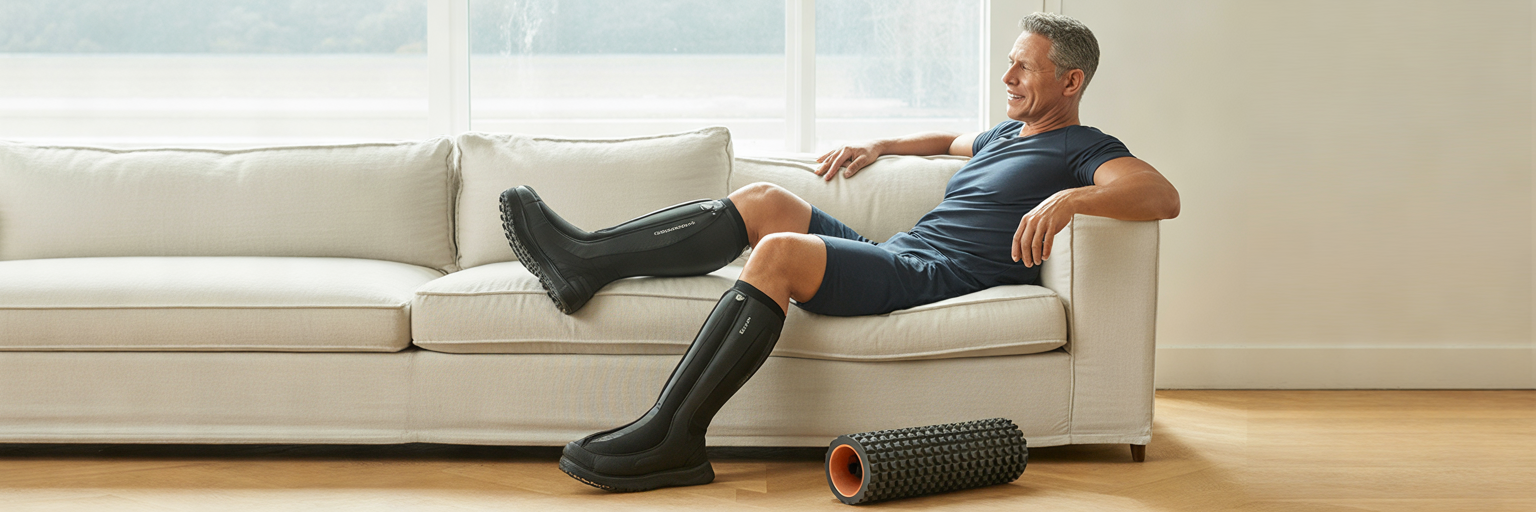
By contrast, the commercial market for motorized muscle recovery equipment sits in a fascinating gray area between subjective comfort and objective performance. High-priced pneumatic compression boots that sequentially inflate around your legs and percussive massage guns dominate social media feeds, yet systematic reviews reveal that their primary documented benefit lies in acute psychological readiness and reduced perceived soreness rather than measurable next-day sprint or strength gains. In fact, spending 90 to 120 seconds per muscle group on a simple foam roller reliably restores joint range of motion and improves your pressure-to-pain threshold at a tiny fraction of the cost. Pneumatic boots still earn their place for endurance athletes who value thirty minutes of enforced, screen-free evening relaxation while fluid is mechanically pushed up their limbs, provided you recognize that you are paying primarily for automated comfort and perceived relief rather than a guaranteed performance leap.
| Recovery Modality | Primary Physiological Mechanism | Optimal Protocol and Timing | Evidence Level and Adaptation Trade-Offs | Typical Australian Ownership Cost |
|---|---|---|---|---|
| Cold Water Immersion (Chiller Tubs) | Vasoconstriction, decreased tissue temperature, reduced acute swelling | 11 to 15 minutes at 11°C to 15°C; ideal after endurance or tournament play | Strong for reducing DOMS; can blunt hypertrophy if used immediately after lifting | $1,500 to $6,000+ (plus ongoing power and filter maintenance) |
| Photobiomodulation (Red Light Panels) | Mitochondrial ATP stimulation, modulation of cellular oxidative stress | 10 to 20 minutes per area pre- or post-session; safe during strength blocks | Promising for fatigue and strength retention, though clinical dosing varies | $600 to $4,500+ (minimal ongoing electricity cost, zero consumables) |
| Static Compression Garments | Graduated external pressure enhancing venous return and clearing lactate dehydrogenase | Worn continuously for 12 to 24+ hours post-resistance training, including during sleep | High evidence for resistance recovery past 24 hours; zero risk of blunting gains | $100 to $300 (zero setup friction, washable, highly portable) |
| Pneumatic Compression Boots | Intermittent sequential peristaltic pressure moving pooled limb fluid | 20 to 45 minutes while seated or reclined in the evening | Moderate to low for objective performance; high for perceived soreness relief | $800 to $2,200+ (requires storage space and battery or wall power) |
Matching Passive Recovery Tools for Athletes to Your Training Block
Selecting the right system ultimately comes down to matching the physiological mechanism of the device to the specific demands of your current training block. If you are in the middle of a dedicated strength or muscle-building phase, your priority is supporting cellular energy production, venous return, and deep sleep without interfering with natural inflammatory remodeling. During those months, pairing overnight static compression garments with a high-irradiance red light panel or exploring our comparison of infrared sauna blankets versus PEMF mats gives you non-blunting evening options that calm a wired nervous system. Conversely, if you are peaking for a marathon, grinding through a high-volume cycling block, or competing in a multi-day masters tournament where rapid soreness clearance matters more than muscle hypertrophy, a chiller-driven cold plunge tub will deliver far greater daily utility.
Beyond physiology, spending between $500 and $5,000 on recovery equipment Australia requires an honest look at how you actually live. Behavioral friction is the silent killer of every home wellness routine. If an infrared blanket or pneumatic boot system takes twenty minutes to unpack from a wardrobe, untangle, and wipe down after use, an exhausted athlete simply will not use it consistently after a hard Tuesday night session. You also need to verify practical local details before ordering, including whether the unit fits comfortably in a suburban garage or compact apartment, operates natively on standard Australian 240V power without bulky transformers, and carries a domestic warranty backed by local servicing technicians rather than requiring expensive international return shipping.
Above all, we hold a firm conviction that no piece of home technology can outwork five hours of fragmented sleep, chronic life stress, or inadequate caloric and protein intake. Passive systems act as strategic multipliers that sit atop your biological fundamentals, helping your body transition smoothly from exertion to restoration once the nutrition and sleep boxes are ticked. Pay close attention to how your joints, resting heart rate, and morning energy respond to different thermal, light, and mechanical inputs over several weeks. When you are ready to evaluate how specific home systems fit your space and training goals, take the time to review independent specifications, wavelengths, cooling capacities, and ownership costs across at least three competing options on our Personal Recovery Lab buyer's directory so you can invest with complete confidence.