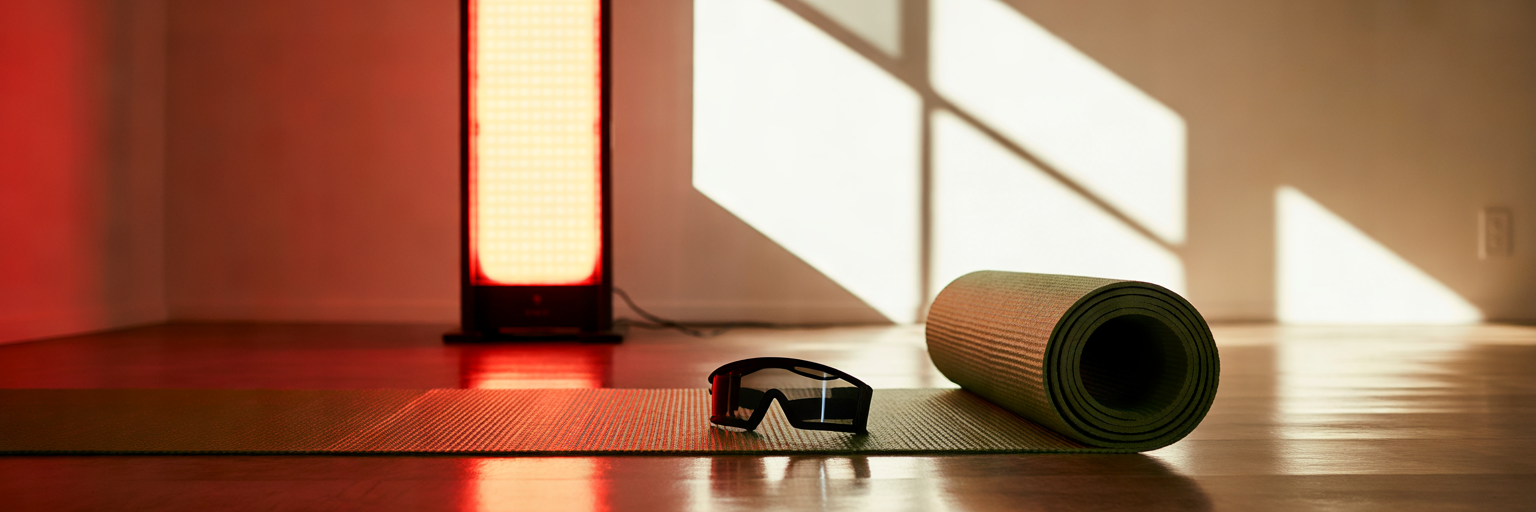
NASA researchers in the 1990s noticed that scientists tending to plant growth experiments under red light diodes experienced remarkably fast healing of minor skin abrasions on their hands. That accidental observation laid the groundwork for modern photobiomodulation, raising a practical question for anyone investing in home wellness equipment today: how can single red light therapy panels address both surface skin ageing and deep muscle soreness?
Why Red Light Therapy Panels Bridge Surface Skin Care and Deep Muscle Repair
You finish a morning coastal run or a heavy strength session feeling capable, yet by late afternoon your knees ache and your calves feel like lead. When you catch your reflection in the bathroom mirror that evening, you notice a separate frustration: decades of Australian sun and chronological time have left your skin drier, thinner, and slower to bounce back than it used to be. Most people treat these two realities in entirely separate buckets, buying expensive topical serums for their face while relying on foam rollers or passive rest to clear deep tissue fatigue.
Both issues actually stem from the exact same bottleneck inside your body. As you age and subject your tissues to physical stress, the tiny power plants inside your cells, known as mitochondria, become less efficient at producing adenosine triphosphate, the chemical currency required for cellular repair. Topical creams sit on the outer epidermis without reaching the deeper dermal layers where structural proteins live, while passive rest takes days to clear metabolic waste when your cellular energy output is sluggish.
Light interacts with living biology in remarkably diverse ways across the natural world. While marine biologists have documented a deep-sea predator that hypnotizes prey with bioluminescent light to manipulate sensory nerves, therapeutic photobiomodulation uses specific, non-thermal light wavelengths to feed cellular repair rather than trigger visual reflexes. By exposing your skin to concentrated red light between 620 and 700 nanometres alongside near-infrared light between 700 and 1100 nanometres, you deliver photons directly to cytochrome c oxidase within your mitochondria. This absorption clears out nitric oxide that clogs cellular respiration, allowing oxygen to flow back in and restore energy production.
When you track your internal physiological baseline through comprehensive blood biomarker testing from Mito Health, you can see how systemic inflammation and cellular health reflect across your entire body, while localized light exposure targets stressed tissue directly from the outside. Setting up effective red light therapy for home routines, as we explain in our foundational guide to using red light therapy at home, relies on understanding how these two light spectrums divide the workload. Because shorter red wavelengths absorb near the surface while longer near-infrared wavelengths travel deep into muscle and bone, selecting a dual-wavelength system lets you address dermal skin structure and post-workout soreness simultaneously.
How Surface Wavelengths Rebuild Collagen and Skin Texture
Fibroblast Stimulation and Clinical Realities
When you stand in front of a panel emitting 620 to 700 nanometre red light, virtually all of those visible photons are absorbed within the first two to three millimetres of your skin. This superficial zone houses your dermis, a dense meshwork of connective tissue maintained by specialized cells called fibroblasts. In your twenties, fibroblasts churn out abundant collagen and elastin to keep skin taut and resilient, but their metabolic output drops steadily every decade thereafter.
Delivering red light directly to this layer gives sluggish fibroblasts the adenosine triphosphate they need to resume synthesizing fresh structural proteins, a mechanism we also examine in our analysis of how red light interacts with connective tissue conditions. Alongside direct fibroblast activation, red wavelengths increase microcirculation in the tiny capillary beds just beneath the epidermis, bringing fresh oxygen and nutrients to the surface while calming localized redness. Clinical trials separate these biological outcomes from cosmetic marketing hype: controlled photobiomodulation studies show that 69 percent of participants reported noticeable wrinkle improvement after 30 consistent sessions, compared to just 4 percent in control groups. Rather than burning or peeling the outer layer like ablative lasers or harsh chemical acids, red light thickens the collagen matrix gradually from within to soften fine lines and smooth rough texture.
The Compliance Trap in Home Skin Rejuvenation
Understanding how fibroblasts respond to light also reveals a critical limitation that many buyers overlook before spending their money. Photobiomodulation stimulates cellular behaviour rather than creating a permanent mechanical alteration. If you stop exposing your skin to those 630 or 660 nanometre wavelengths, your mitochondrial output and fibroblast activity gradually drift back to their previous baseline, and visible improvements in skin plumpness and elasticity typically begin to fade within four weeks.
This biological reality makes ongoing compliance the single biggest factor in whether light therapy works for skin health. Paying per session at a wellness clinic or beauty salon quickly becomes expensive and logistically tedious when you need three to five treatments every week indefinitely. Investing in home recovery equipment Australia residents can easily position in a bedroom corner or home study removes that friction entirely. Ten minutes of gentle, non-thermal light absorption right after brushing your teeth turns collagen maintenance into an effortless habit rather than another appointment on your calendar.
What Near-Infrared Light Does for Sore Muscles and Physical Fatigue
Pre-Exercise Conditioning and Creatine Kinase Reduction
While visible red light stops in the dermis, near-infrared wavelengths between 700 and 1100 nanometres pass through the skin with minimal resistance, travelling up to five centimetres deep into muscle bellies, tendons, and joint capsules. If you wake up with stiff Achilles tendons or heavy quadriceps forty-eight hours after a hilly ride or resistance workout, you are feeling the effects of microscopic muscle fibre tears and localized oxidative stress known as delayed-onset muscle soreness.
Applying near-infrared light either directly before exercise as a muscular pre-conditioning step or shortly afterward accelerates how quickly those deep tissues clear cellular debris and rebuild contractile proteins. According to a comprehensive research review by the American Council on Exercise, clinical trials demonstrate that photobiomodulation can reduce blood levels of creatine kinase, a primary enzymatic marker of muscle damage, by roughly 160 U/L following intense physical exertion. Looking closely at the data reveals an important distinction for everyday buyers: research consistently shows pronounced strength recovery and soreness reduction for moderately active adults or individuals returning to regular training after a break, whereas elite, full-time athletes whose mitochondrial efficiency is already near its genetic ceiling often experience subtler, less consistent shifts.
How Light Therapy Compares to Cold Water Recovery
To see where a light panel fits in your home setup, it helps to contrast how your body reacts to light versus temperature-based muscle recovery equipment. When you immerse yourself in a dedicated chiller tub like Plunge Chill or wrap swollen joints in localized cooling systems such as Ice Blankets, the intense cold triggers rapid vasoconstriction. That sudden narrowing of blood vessels restricts fluid accumulation, numbs nerve endings, and blunts acute heat and swelling right after a gruelling session.
Near-infrared light operates on the opposite physiological pathway, a contrast we explore thoroughly in our comparison of cold plunges versus red light therapy. Instead of constricting vessels through thermal shock, near-infrared photons trigger the release of nitric oxide into the bloodstream, gently dilating blood vessels and increasing microcirculation without raising core tissue temperature. If your goal is numbing raw joint heat immediately after a marathon, cold immersion excels. If you want to stimulate deep cellular repair, preserve hypertrophy signals after strength training, and ease chronic morning stiffness without stepping into freezing water, a dual-spectrum light panel delivers targeted recovery in complete comfort.
| Spectrum Range | Primary Tissue Depth | Biological Mechanism | Target Outcome |
|---|---|---|---|
| Red Light (620 to 700 nm) | Superficial epidermis and dermis (1 to 3 mm) | Stimulates dermal fibroblasts to synthesize collagen and elastin | Smoother skin texture, fine line reduction, surface elasticity |
| Near-Infrared (700 to 1100 nm) | Deep dermis, subcutaneous tissue, muscle, and joint capsule (up to 50 mm) | Boosts mitochondrial ATP output and lowers creatine kinase by ~160 U/L | Reduced DOMS, faster strength restoration, joint mobility support |
| Combined Dual-Wavelength Output | Simultaneous surface and deep tissue absorption | Synchronizes microvascular blood flow with deep cellular energy repair | Comprehensive healthy ageing and full-body post-workout recovery |
Dosing Realities and Why More Light Is Not Always Better
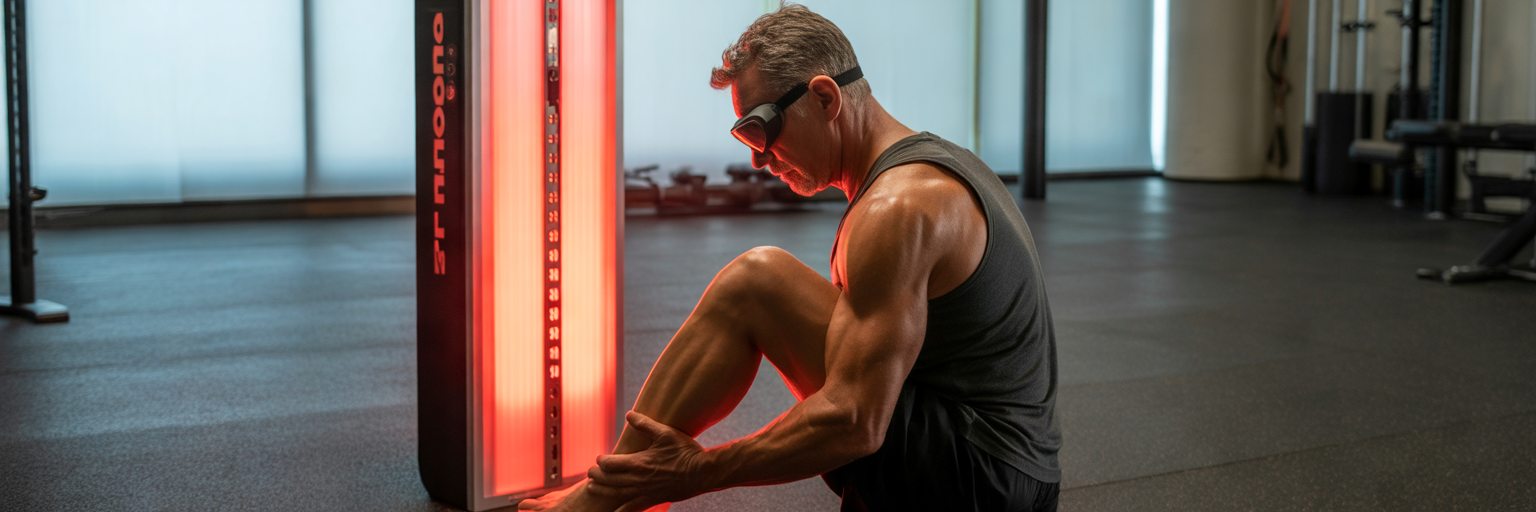
One of the biggest frustrations you will encounter after unboxing a high-powered home panel is the lack of standardized industry instructions. One manufacturer suggests standing six inches away for twenty minutes daily, while a competing brand recommends twelve inches for ten minutes three times a week. When a ten-minute session leaves your lower back feeling looser and your facial skin looking brighter, human nature tempts you to double the time and press your skin right up against the diodes.
In photobiology, that instinct backfires completely due to a phenomenon called the biphasic dose response. Much like watering a houseplant or taking morning sun, cellular absorption operates within a sweet spot. Too little light fails to trigger a mitochondrial reaction, an optimal dose stimulates peak adenosine triphosphate synthesis, and excessive light energy overwhelms the cells, generating extra reactive oxygen species that actually inhibit repair and negate your skin and muscle benefits. When integrating a panel into our blueprint for building a passive recovery setup at home, following five practical dosing and safety boundaries ensures you stay inside that productive therapeutic window.
- Calibrate your treatment distance to your target tissue: For superficial facial skin care and collagen synthesis, position yourself 30 to 45 centimetres away from a high-output panel so the light spreads evenly and delivers a gentle surface dose. For deep hamstring, glute, or lower back recovery, step closer to a 15 to 25 centimetre distance so higher photon density forces near-infrared wavelengths deeper into the muscle belly.
- Cap individual session durations between 10 and 20 minutes per area: Modern LED arrays emit concentrated irradiance that saturates cellular photoreceptors quickly. Running a panel for 40 minutes on the same muscle group wastes electricity and pushes your cells past the biphasic threshold into diminishing returns.
- Respect weekly frequency limits of three to five sessions per week: Just as muscles remodel during rest days between workouts, fibroblasts and muscle fibres need recovery intervals between light exposures to process cellular signals. Leaving 24 to 48 hours between heavy doses often produces better long-term skin texture and soreness relief than twice-daily blasting.
- Wear opaque blackout goggles during facial and upper-body sessions: High-intensity LED panels are vastly brighter than consumer face masks, and invisible near-infrared wavelengths do not trigger a strong squint reflex even when entering the eye directly. Always use proper certified eye protection rather than relying on closed eyelids when facing the array.
- Review photosensitizing medications and medical history before starting: Certain antibiotics, retinoids, St John's Wort, and anti-inflammatory drugs increase dermal sensitivity to light, while active skin cancers or hyperthyroidism require medical clearance. Check with your general practitioner or dermatologist if you take daily prescriptions or manage complex health conditions.
Evaluating Specifications and Choosing the Right System for Home Use
Irradiance, Wavelength Transparency, and Panel Sizing
Shopping for a system priced between $500 and $5,000+ requires looking past flashy marketing terms like medical-grade or inflated total wattage numbers. Total wattage only tells you how much power the unit draws from your wall socket, not how much healing light actually reaches your body. The metric that determines real-world performance is verified irradiance, measured in milliwatts per square centimetre (mW/cm2) at a realistic treatment distance of 15 to 30 centimetres. Trustworthy brands publish third-party spectrometer measurements rather than deceptive zero-distance solar meter readings, and they clearly specify the exact ratio of proven wavelengths such as 630 and 660 nanometre red paired with 810, 830, and 850 nanometre near-infrared.
Your physical build and daily habits should dictate the physical size of the panel you buy, a topic we break down step by step in our comprehensive buyer's guide on how to choose the best red light therapy panel. If your main priority is softening facial lines, improving neck texture, and occasionally spot-treating a stiff knee or tennis elbow, a compact tabletop unit sitting on a desk works wonderfully. However, if you buy a tiny tabletop panel expecting to treat sore quads, hamstrings, shoulders, and your lower back after gym sessions, you will quickly grow tired of spending sixty minutes repositioning the light four times in a row. Half-body and full-body panels cost more upfront, but they cover large muscle groups and facial skin simultaneously in a single ten-minute standing or lying session.
| Panel Category | Typical Australian Price Range (AUD) | Best Suited Physical Goals | Real-World Treatment Time |
|---|---|---|---|
| Compact Tabletop Panel | $500 to $950 | Facial skin rejuvenation, neck texture, and single-joint soreness (ankle, elbow, knee) | 10 to 15 minutes per targeted area |
| Mid-Size Half-Body Panel | $1,100 to $2,200 | Simultaneous facial skin care and upper torso or hamstring recovery | 15 to 20 minutes (requires 1 to 2 body positions) |
| Full-Body Single or Modular Array | $2,500 to $5,500+ | Systemic post-exercise muscle recovery, spinal mobility, and full-body skin health | 10 to 20 minutes total for complete front and back coverage |
What Australian Buyers Should Compare Before Purchasing
When researching red light therapy Australia suppliers, global review sites often ignore local logistics that heavily impact your total ownership cost. High-output light panels are built inside heavy steel housings packed with internal cooling fans and power drivers, making them dense and expensive to move. Before deciding on the best red light therapy panel for your household, evaluate four practical Australian purchasing factors alongside the optical specs.
- Verify 230V/50Hz electrical compatibility and RCM compliance: Ensure the panel is engineered for Australian mains voltage with standard Australian three-pin plugs and carries the Regulatory Compliance Mark, rather than relying on cheap travel adapters on high-draw electrical equipment.
- Calculate total landed freight and wheeled stand costs: Full-body panels and steel floor stands can weigh between 15 and 35 kilograms. Check whether the brand dispatches from an Australian warehouse in Sydney, Melbourne, or Brisbane with reasonable domestic shipping, or if you face hundreds of dollars in international air freight and import GST at the border.
- Confirm local Australian warranty servicing and parts replacement: A three-year warranty means very little if the company requires you to pay $400 in return shipping to an overseas factory when an internal cooling fan or LED driver fails after eighteen months. Prioritise suppliers with local repair technicians or domestic replacement dispatch.
- Read the fine print on at-home trial periods and return restocking fees: Many brands advertise 60-day trial windows, yet deduct 15 to 20 percent restocking fees plus original freight costs if you change your mind. Know the exact financial commitment before ordering.
Understanding how surface fibroblasts and deep muscle mitochondria respond to specific wavelengths strips away the mystery surrounding photobiomodulation. Start by deciding whether targeted facial skin maintenance or whole-body post-workout recovery will be your primary daily use case, and measure the floor or wall space where the unit will actually live. From there, we encourage you to explore our red light therapy panels directory and compare at least three suitable systems side by side on verified irradiance, coverage dimensions, and local Australian warranty support before choosing the setup that fits your home.